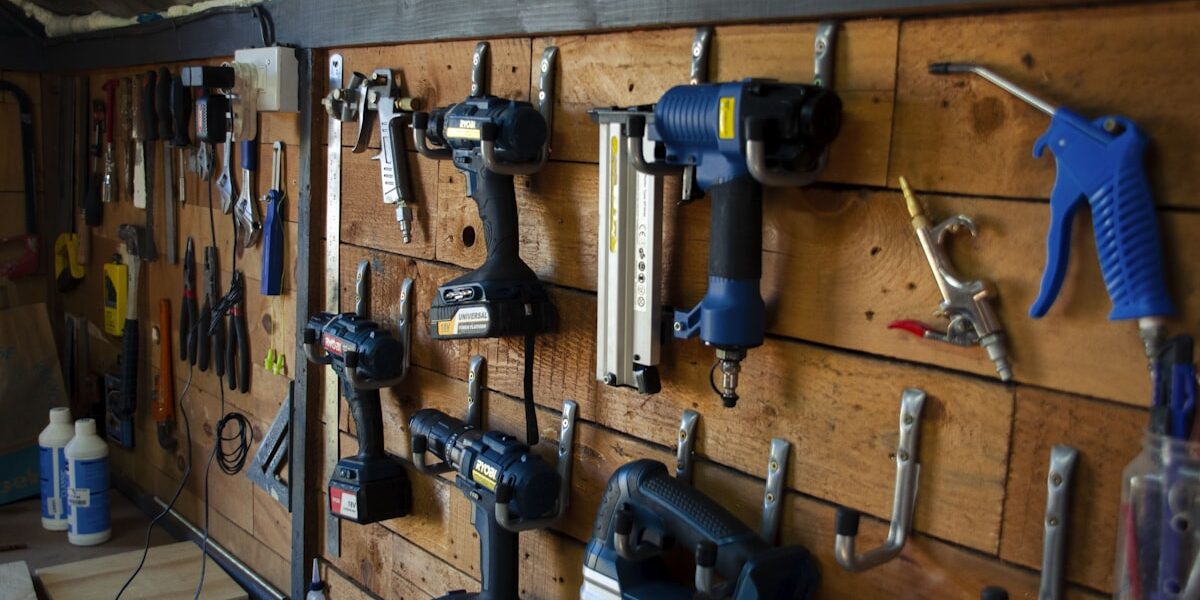
There is no single best tool brand for every woodworker. DeWalt and Makita offer broad cordless systems; Milwaukee is especially strong for trade-focused cordless tools; Bosch covers useful cutting, routing, sanding, and measuring categories; Festool emphasizes an integrated cutting, sanding, joinery, and dust-extraction workflow; RIDGID and Ryobi can make sense for value-conscious buyers; and Metabo HPT is worth comparing for saws, nailers, and its MultiVolt platform.
This article includes affiliate links. We may earn a commission at no extra cost to you.

The right brand depends on the tool, budget, battery system, service options, and kind of woodworking you do. A cabinetmaker choosing a track saw and dust extractor has different priorities from a remodeler buying cordless drills and nailers. This guide compares the major ecosystems without pretending that one logo wins every category.
Best tool brands for woodworking at a glance
| Brand | Good starting point for | Woodworking strengths to compare | Important consideration |
|---|---|---|---|
| DeWalt | General contractors and mixed shop/jobsite work | Large 20V MAX system, saws, routers, planers, nailers, and FLEXVOLT options | Confirm battery and tool compatibility within the specific platform |
| Makita | Woodworkers wanting a broad 18V ecosystem | LXT saws, routers, sanders, planers, dust extraction, and 18V X2 tools | LXT and XGT are separate battery platforms |
| Milwaukee | Trade-focused cordless users | M18 saws, routers, sanders, nailers, lighting, and storage | Lineup is broader than woodworking, so compare the exact shop tools you need |
| Bosch | Cutting, routing, sanding, measuring, and benchtop buyers | Routers, jigsaws, sanders, miter saws, track saws, lasers, and 18V tools | Check local availability for the specific cordless category |
| Festool | Furniture and finish work centered on a coordinated system | Track saws, sanders, routers, DOMINO joinery, extractors, and storage | Higher system cost requires a workflow-level justification |
| RIDGID | Value-oriented shop and remodel work | 18V tools plus selected stationary, pneumatic, and dust-control products | Lifetime Service Agreement eligibility requires timely registration and has detailed conditions |
| Metabo HPT | Carpentry, fastening, and hybrid corded/cordless needs | Nailers, saws, routers, and 18V/36V MultiVolt products | Warranty coverage varies by product; verify the exact model |
| Ryobi | DIY and occasional-use buyers prioritizing breadth and entry cost | ONE+ drills, saws, sanders, nailers, lights, and shop accessories | Compare precision, duty cycle, and service needs for frequent professional use |
How to choose a tool brand
Brand reputation is a weak buying method by itself. Compare the factors that affect the work you actually perform:
- Start with the next five tools, not the first tool. List what you expect to buy in the next two or three years. A discounted drill kit is not a bargain if the same battery system lacks the router, nailer, track saw, or dust extractor you later need.
- Separate cordless from corded and stationary decisions. Battery compatibility creates lock-in. A corded router, table saw, or dust collector does not need to match the logo on your drill.
- Check the whole workflow. For fine woodworking, blade availability, guide rails, dust ports, extractor compatibility, fences, bases, and accessories can matter more than headline power.
- Handle the tool. Grip size, trigger reach, balance, sight lines, adjustment controls, and battery weight affect accuracy and fatigue.
- Verify service locally. Look up authorized service locations, parts diagrams, turnaround options, and warranty exclusions before buying.
- Price a usable kit. Include batteries, chargers, rails, bases, blades, hoses, adapters, cases, and other required accessories—not just the bare-tool price.
DeWalt: broad cordless coverage for shop and jobsite
DeWalt is an easy system to shortlist when woodworking overlaps with construction or remodeling. Its 20V MAX catalog covers drills, impact drivers, circular and reciprocating saws, nailers, routers, sanders, planers, lights, and many trade-specific tools. DeWalt states that the platform has more than 300 products.
FLEXVOLT batteries can change voltage for compatible 20V MAX and 60V MAX applications. That gives DeWalt a route from ordinary cordless tools into higher-demand saws and equipment, but product naming matters: 20V MAX, 20V MAX XR, FLEXVOLT ADVANTAGE, and 60V MAX FLEXVOLT do not describe one identical performance tier.
Choose DeWalt when: you need a wide carpentry ecosystem, want cordless and jobsite tools under one battery family, or already own compatible batteries. Compare individual models for dust collection, runout, fence accuracy, and included accessories rather than assuming every yellow tool leads its category.
Makita: a deep 18V system with woodworking breadth
Makita’s 18V LXT system is notable for both breadth and woodworking coverage. Makita reports more than 350 LXT products in 2026. The catalog includes circular and track saws, jigsaws, routers, sanders, planers, dust extractors, drills, impact drivers, nailers, and outdoor equipment. Some higher-demand LXT products use two 18V batteries to produce a 36V configuration while remaining in the LXT ecosystem.
Makita also sells XGT, a separate 40V max/80V max platform. An LXT battery does not directly fit an XGT tool. Buyers should decide whether the mature LXT range or higher-voltage XGT path better matches the planned tool list before accumulating batteries.
Choose Makita when: you want a broad cordless woodworking catalog, value compact tool options, or can build around LXT’s saw, routing, sanding, and extraction choices. Check the platform badge on every kit so LXT and XGT purchases remain intentional.
Milwaukee: trade-oriented M18 depth
Milwaukee’s M18 platform is designed around professional trades and extends well beyond drills and impact drivers. Woodworking-relevant options include circular and miter saws, jigsaws, routers, sanders, oscillating tools, nailers, dust extractors, vacuums, lights, and PACKOUT storage. Milwaukee identifies its M18 system as having more than 200 tools.
M18 FUEL denotes selected tools combining Milwaukee’s brushless motor, electronics, and battery technology; it is not the name of a separate battery interface. Warranty periods are product-specific, so use Milwaukee’s warranty page for the exact tool and battery rather than assuming one term covers the entire system.
Choose Milwaukee when: woodworking is part of broader carpentry, installation, electrical, plumbing, or maintenance work and you want those trades on one battery platform. For a stationary furniture shop, compare its precision-oriented range with brands specializing in tracks, extraction, and fixed machinery.
Bosch: strong cutting, routing, measuring, and benchtop categories
Bosch deserves consideration by the tool rather than only as a battery ecosystem. Its woodworking catalog includes routers and router tables, jigsaws, sanders, planers, miter saws, track/plunge saws, lasers, dust extraction, and benchtop products. Its cordless lines include 12V Max and 18V tools, while CORE18V and PROFACTOR target higher-demand 18V applications.
Bosch’s current U.S. limited warranty states five years for 18V cordless and benchtop tools and chargers and three years for 18V batteries, while other categories can have different terms. Always check the current product catalog and warranty for the model being considered.
Choose Bosch when: a specific router, jigsaw, sander, saw, or measuring tool fits the work, or the available 18V range covers your planned cordless purchases. A corded Bosch router or miter saw can be a sensible standalone choice even if your drills use another battery.
Festool: an integrated precision and dust-control workflow
Festool’s strongest argument is system integration. Its portfolio connects track saws, sanders, routers, DOMINO joinery machines, dust extractors, storage, and accessories into a coordinated workflow. That can reduce setup friction in furniture, cabinetry, installation, and finish work—especially when dust collection and repeatable guide-rail cuts matter.
The tradeoff is total system cost. Evaluate Festool as a workflow rather than comparing one bare tool with an unrelated competitor. Price the extractor, hoses, rails, accessories, abrasives, and storage needed to realize the system benefit. The official Festool catalog now includes corded and cordless cutting, sanding, routing, joinery, and extraction products.
Choose Festool when: precision cutting, finish sanding, portable dust extraction, and coordinated accessories create enough time or quality value to justify the investment. It does not need to replace every drill, nailer, or stationary machine in the shop.
RIDGID: value plus a conditional service program
RIDGID’s woodworking-relevant range includes 18V drills, saws, sanders, routers, nailers, vacuums, and selected stationary tools. Its most distinctive buying consideration is the Lifetime Service Agreement (LSA), but the details matter. Eligible products must be bought from an authorized retailer and registered with proof of purchase within the required period—currently 90 days. Coverage is limited to qualifying products and the original purchaser and is not transferable.
Read the complete RIDGID LSA terms, save the receipt, and confirm approval rather than treating “lifetime” as an unconditional warranty on every product.
Choose RIDGID when: its exact tools fit your needs, the available kits offer good total value, and you are willing to complete and preserve the LSA registration requirements.
Metabo HPT: MultiVolt flexibility and carpentry tools
Metabo HPT offers 18V and 36V MultiVolt products, with a range that includes saws, routers, nailers, drills, and other carpentry tools. Selected 36V MultiVolt tools can also use an AC adapter, which is useful when a task alternates between mobile work and long stationary sessions.
North American branding is changing: Metabo professional power tools are moving under the Metabo HPT name in North America. The company says existing batteries, chargers, service, and warranties remain supported. Because coverage varies across product families, verify each model on the official transition and product pages.
Choose Metabo HPT when: its nailers, saws, or hybrid MultiVolt options solve a specific need and dealer or service support is convenient in your area.
Ryobi: broad DIY coverage
Ryobi ONE+ is commonly considered by DIY woodworkers because one battery system covers a wide variety of tools, lights, inflators, cleaning products, and outdoor equipment. For occasional shop work, breadth and accessible kits may matter more than the last increment of power.
Choose Ryobi when: the workload is intermittent, budget matters, and the ONE+ catalog covers your planned tools. For daily production, compare the exact model’s adjustment quality, dust collection, duty cycle, service process, and ergonomics with professional alternatives. “DIY” does not mean unusable; it means buying against realistic frequency and precision needs.
Do all your tools need to be the same brand?
No. Standardizing cordless tools can reduce battery and charger cost, but forcing every purchase into one brand can produce a worse shop. A practical setup often uses:
- one primary cordless platform for drills, drivers, portable saws, and nailers;
- corded or stationary machines chosen independently for accuracy, capacity, safety, and service;
- a dust-extraction system selected for filtration, airflow, hose compatibility, and automatic tool activation;
- specialty systems—such as a track saw or joinery tool—when their workflow benefit justifies separate accessories.
Battery adapters are not a universal solution. They may bypass communication or low-voltage protections and can affect tool balance or warranty coverage. Use only combinations explicitly approved by the manufacturers.
Best brands by woodworking situation
New DIY workshop
Shortlist Ryobi, RIDGID, DeWalt, Makita, Bosch, and Metabo HPT based on local pricing and the next five tools. Spend more selectively on the table saw, dust collection, and measuring equipment that influence safety and accuracy.
Furniture and cabinet shop
Compare Festool, Makita, Bosch, and DeWalt for track cutting, routing, sanding, and extraction. Choose stationary saws, jointers, planers, and dust collectors by machine-specific requirements rather than battery loyalty.
Carpenter or remodeler
DeWalt, Makita, Milwaukee, Bosch, Metabo HPT, and RIDGID all merit a tool-list comparison. Include nailers, portable saws, oscillating tools, lighting, vacuums, storage, dealer stock, and repair turnaround.
One premium workflow upgrade
Do not replace the whole shop. Identify the bottleneck—dusty sanding, sheet breakdown, portable joinery, or repeated setup—and compare a complete Festool or competing system for that workflow.
Questions to answer before buying
- Which five cordless tools will I realistically buy next?
- Does the platform offer the saws, router, sander, nailer, vacuum, and lighting I need?
- What will the complete setup cost with batteries, charger, blades, rails, bases, hoses, and cases?
- Can I test grip, balance, controls, vibration, and sight lines locally?
- Where is the nearest authorized repair option, and are common parts available?
- What does the exact tool warranty cover, and does it require registration?
- Would a corded or stationary tool perform this job better without adding another battery platform?
Bottom line
For the broadest general-purpose shortlist, begin with DeWalt, Makita, Milwaukee, and Bosch. Add Festool when integrated precision and dust control are central to the work; RIDGID and Ryobi when value and breadth matter; and Metabo HPT when its saw, nailer, or MultiVolt options fit the job.
Then ignore the logo and compare the exact models. For the next purchase, our table saw buying guide, sliding compound miter saw guide, and dust extractor guide narrow the decision by tool category.
Fact-checked against current manufacturer catalogs and warranty pages on August 2, 2026. Product lines, compatibility, and warranty terms can change; verify the linked manufacturer page and exact model before purchase.

Stay in the loop
Get the latest wood working workshop updates delivered to your inbox.