The Core Difference Nobody Explains Clearly
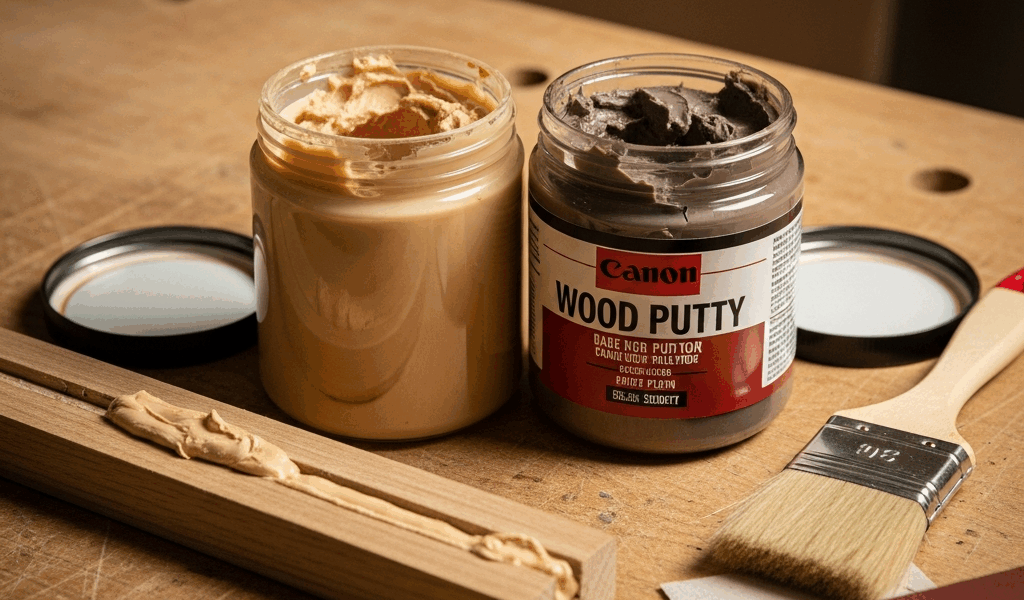
Wood filler vs wood putty has gotten complicated with all the vague advice flying around. Here’s what you actually need to know, mid-project or otherwise: wood filler hardens, sands clean, and belongs on bare wood before any finish touches it. Wood putty stays flexible, resists sanding, and lives on surfaces that are already finished. Everything else flows from that single distinction.
This article includes affiliate links. We may earn a commission at no extra cost to you.
| Feature | Wood Filler | Wood Putty |
|---|---|---|
| Hardness when dry | Firm, rigid | Stays slightly flexible |
| Sandable | Yes | No — gums up sandpaper |
| Paintable | Yes | Yes |
| Stainable | Mostly, with caveats | No — resists stain |
| Flexibility | None after curing | Moderate — holds up to movement |
| Best project timing | Before finishing | After finishing |
Print that table out and tape it directly to your shop wall. I mean it. Refer to it every single time until the sequence is automatic.
When You Need Wood Filler
As someone who has refinished everything from gouged pine workbench boards to cracked oak furniture stripped down to bare grain, I learned everything there is to know about when filler earns its place. Today, I will share it all with you.
The principle never changes — bare wood, repair first, finish second. That’s the whole framework.
The most common scenarios where filler is the right call:
- Filling cracks, checks, and gouges in raw lumber before staining
- Repairing furniture you’re stripping down and refinishing completely
- Closing up open grain on large flat surfaces like tabletops
- Patching knot voids before painting raw trim or millwork
Here’s the caveat that trips people up — and it tripped me up the first time I refinished a walnut side table. Most fillers claim to be stainable. Technically, they are. The stain soaks in. But filler absorbs stain differently than surrounding wood grain does. On close-grained maple, a repair can disappear nicely. On open-grained or heavily figured wood, you’ll often see a flat, slightly off-color patch exactly where the filler sits. Test on scrap first. Always. No exceptions.
Water-Based vs Solvent-Based Filler
Water-based fillers — the kind that clean up with water, like DAP Plastic Wood-X or Elmer’s E848D12 — are easier to use, dry faster, and sand down cleanly. They work fine for interior furniture and most standard repairs. Solvent-based fillers are more durable and moisture-resistant — better for exterior wood or anywhere the repair faces real stress. They smell significantly worse and need mineral spirits for cleanup. Pick based on where the project lives.
Not which one is on sale at Home Depot this week.
When You Need Wood Putty
Probably should have opened with this section, honestly. Because this is the scenario most homeowners are actually standing in. You paint the trim. You nail it in. You fill the holes. That’s a putty job. Done.
Wood putty solves one specific problem: the wood is already finished and something needs filling. Nail holes in painted baseboard after installation. Dings in a finished door frame you noticed three days after painting. Small surface gaps in exterior trim that’s already primed and coated.
The flexibility is the entire point. Finished surfaces expand and contract with temperature swings and humidity changes — sometimes dramatically. Rigid filler applied over cured paint or lacquer will crack along the repair edges within a season. Sometimes within weeks. Putty moves with the wood. That’s what you want.
A few hard limits on putty worth knowing:
- It does not accept stain well. Apply it to bare wood before staining and you’ll get a blotchy, color-repelling spot that’s essentially impossible to fix without stripping.
- It cannot be sanded smooth — it gums up immediately and never truly hardens.
- For exterior use, buy a putty rated specifically for outdoor exposure. Regular interior putty dries out, shrinks, and falls out of the hole within a year outside.
Minwax Color-Matched Wood Putty might be the best option for finished furniture touch-ups, as that work requires a close color match. That is because they’ve pre-tinted the product to align with their most popular stain lines — Early American, Provincial, Special Walnut. For painted surfaces, color matching is simple. Use white putty or paint right over it.
The Mistakes That Waste Time and Ruin Finishes
Frustrated by a blotchy stain job on a cabinet door I’d spent six hours sanding, I went back and figured out exactly what went wrong. I’d used wood putty — a $4.99 tub of Elmer’s — to fill some small checks before staining. The stain pooled on top of every putty spot like water on wax. I had to strip the whole panel and start from raw wood again. Don’t make my mistake.
Mistake 1 — Using putty on bare wood before staining. The binders in wood putty resist penetrating stains. You end up with light, color-refusing spots that are impossible to blend after the fact. Bare wood getting stained means only filler belongs on that surface.
Mistake 2 — Using filler over a finished surface. Rigid filler applied over cured paint or lacquer has nothing solid to bond to, and it can’t flex with the wood. The repair looks fine for a few weeks. Then hairline cracks appear around the perimeter of the patch. Not a defect — wrong product entirely.
Mistake 3 — Filling deep voids in a single pass. Both filler and putty shrink as they cure. Pack either one into a void deeper than about 3/8 of an inch without layering and you’ll get a sunken repair — the product cures on the outside while still wet inside, pulls inward, leaves a visible divot. Fill in layers. Let each one dry fully before adding the next. Takes longer. Works every time.
Quick Decision Guide — Which One to Buy
So, without further ado, let’s dive in. Run through these and your answer is right at the end:
- Bare wood, and you’re staining it — Wood filler, full stop. Test stain absorption on a scrap piece before committing to the actual project surface.
- Bare wood, and you’re painting it — Either product technically works once painted over, but filler is still the better call — at least if you want a surface you can sand perfectly flat.
- Surface is already finished with paint or clear coat — Wood putty. Don’t bother with filler here.
- Exterior trim that’s already painted — Exterior-rated wood putty specifically. Regular putty dries out fast in outdoor conditions.
- Deep void, more than 3/8 inch — Whichever product you use, apply it in layers. No exceptions.
- Nail holes in pre-finished flooring or trim — Color-matched putty, applied after installation with a putty knife or your finger.
The rule that covers everything: filler goes on before the finish, putty goes on after. That’s what makes the sequence endearing to us woodworkers — get it right once and it becomes second nature for every project that follows.




Stay in the loop
Get the latest wood working workshop updates delivered to your inbox.