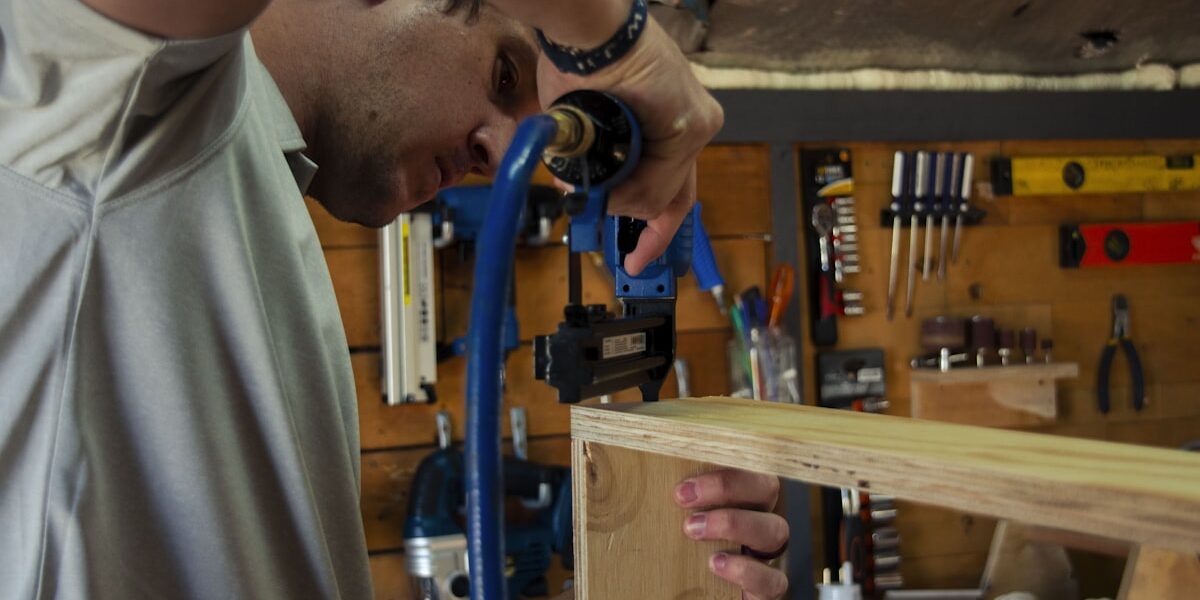
Plywood Cart Plans for Your Shop
Shop carts have gotten a lot more attention lately with all the workshop organization content flying around. I’ve been building shop furniture for years, and a plywood cart is one of those builds I keep coming back to — they’re genuinely useful, fast to build, and cost almost nothing. Here’s how to think about them and how to build one.
Why Plywood
Plywood is a composite material built from glued, cross-laminated wood veneers. That cross-grain construction is what gives it strength — it resists splitting along the grain in a way that solid wood doesn’t. It’s also reasonably lightweight for its load capacity, which matters when you’re building something that needs to roll around a shop without becoming a chore to move.

- Durability: Plywood carts handle significant weight. The cross-laminated structure distributes load evenly and resists the racking forces a wheeled cart encounters.
- Flexibility: Available in thicknesses from 1/4-inch to 3/4-inch, which lets you optimize the structure for weight versus strength.
- Cost: A sheet of 3/4-inch plywood runs $40-$60 and will build you a solid cart with material left over for a second project.
Construction involves a simple box or shelf frame with a deck surface mounted on swivel casters. A pair of fixed casters at one end and two locking swivels at the other end make the cart easy to steer. Add a handle or a push rail and you’ve got something genuinely useful for moving tools, lumber, or glue-ups around the shop.
Shop Cart Applications
In a busy workshop, plywood carts solve specific problems. A dedicated outfeed cart rolls behind the table saw and catches long boards on the way through. A tool cart parks next to whatever station you’re working at and holds what you need within arm’s reach. A clamp cart organizes and rolls all your clamps to whatever glue-up is happening without carrying them one at a time.
I built a plywood cart specifically for plywood storage — full sheets on the bottom shelf (stored vertically), cut-offs on the upper shelf, and a small bin on the side for scrap pieces too useful to throw away. Took a Saturday afternoon and freed up a huge amount of floor space.

Home and Workshop Use
Beyond the shop, plywood carts work in garages, gardens, and warehouses. Gardeners use them to move potted plants, tools, and bags of soil. The flat wooden deck doesn’t vibrate plants the way metal carts sometimes do, and it’s easy to hose off. In warehouses, low-cost plywood carts move boxes and inventory efficiently while navigating the tight spaces that larger equipment can’t manage.
Building Your Own
The build is straightforward. Here’s my basic shop cart plan:
Materials: One sheet of 3/4-inch plywood, pocket screws or dado-and-rabbet joinery, four swivel casters (two locking), and a piece of 1-1/4 inch pipe or hardwood dowel for a push handle.
Process: Cut the deck, shelf, and side panels from the plywood sheet. Assemble with glue and pocket screws. Rout or sand all the edges smooth — sharp plywood edges are unpleasant to grab. Mount the casters to the bottom of the legs or to a base frame. For casters, get quality 3-inch or 4-inch swivels with a 200-pound rating — cheap casters are where shop carts typically fail first.
Wish I’d known from the start to add a raised lip around the deck — tools roll off flat surfaces constantly. A 3/4-inch edge cleat around the perimeter takes five minutes to add and prevents a lot of frustration.
Customization
That’s what makes plywood carts so useful to woodworkers — they’re infinitely adaptable. Add vertical dividers for sheet goods storage. Add a lower shelf for heavy items, upper shelf for lighter things. Add a magnetic strip on one face for keeping metal tools accessible. Add a small drawer or two for bits and accessories.
Removable side panels or fold-down extensions expand the working surface when needed. A cleat system (see: French cleats) on the cart sides lets you reconfigure tool holders without any permanent commitment.
Environmental Notes
Plywood from FSC-certified sources means the wood was harvested from responsibly managed forests. Plywood’s efficient use of wood fiber — thin veneers from logs that wouldn’t yield quality solid lumber — makes it a genuinely sensible material choice. A well-built plywood cart will last decades with minimal maintenance, which beats replacing cheap alternatives every few years.
A plywood shop cart is one of those projects where the effort-to-value ratio is hard to beat. Build it in an afternoon and use it for the life of your shop.

Stay in the loop
Get the latest wood working workshop updates delivered to your inbox.