Ripping and Crosscutting: Understanding the Cuts
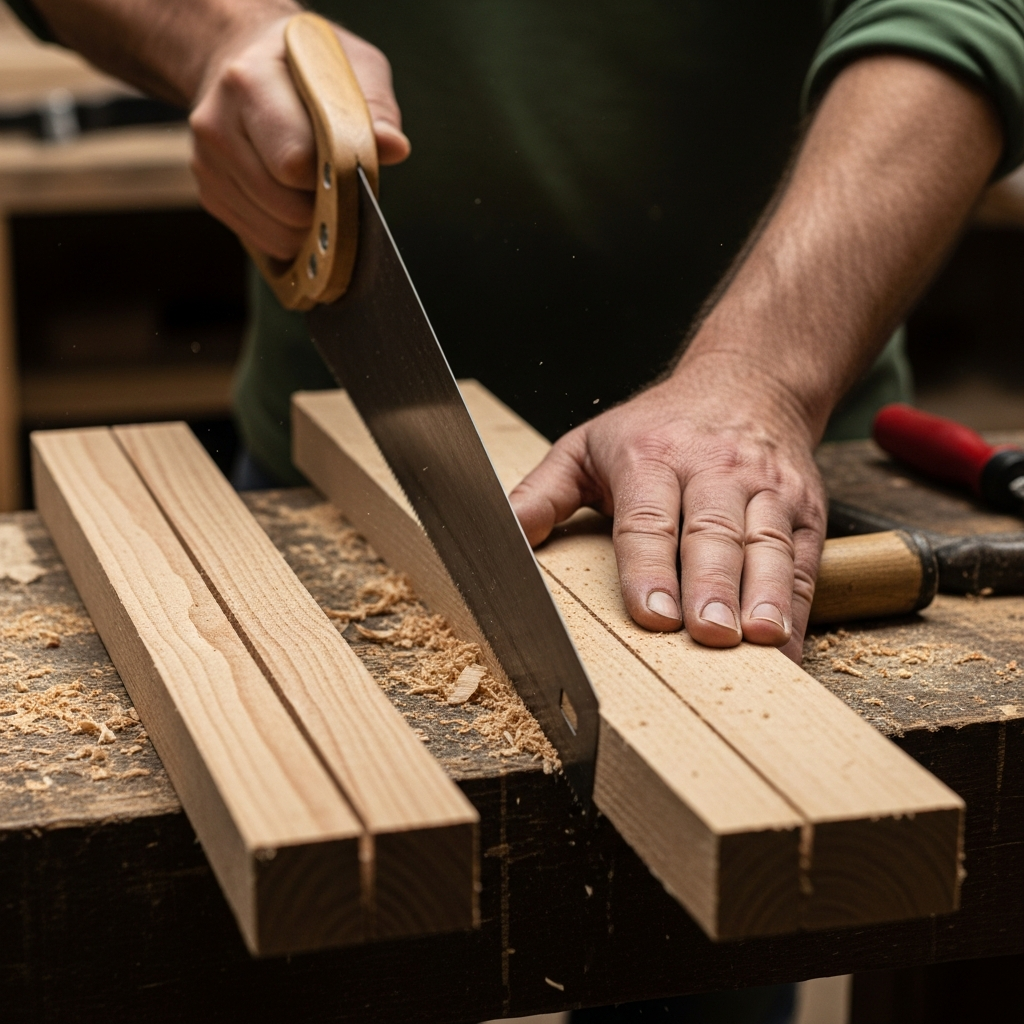
Wood cuts differently depending on direction. Ripping runs parallel to the grain; crosscutting runs perpendicular. Each requires different saw teeth, different techniques, and different approaches. Understanding both enables accurate cuts in any direction.
How Wood Grain Works
Wood grain represents the fibrous structure running along the tree trunk. These fibers provided the living tree’s structural strength. In your lumber, they create directional properties affecting how the wood cuts, splits, and behaves.
Ripping severs relatively few fibers while separating them lengthwise. Crosscutting severs many fibers across their length. This fundamental difference explains why the cuts require different approaches.
Rip Cuts Explained
Ripping runs with the grain, typically along a board’s length. The saw teeth act like tiny chisels, chipping away material between grain lines. Few fibers need severing; the cut mainly separates already-distinct grain structures.
Rip Saw Teeth
Rip teeth have flat faces filed straight across, creating chisel-like cutting edges. They’re set alternately left and right to create a kerf wider than the blade, preventing binding. Fewer teeth per inch allows efficient waste removal during the long cuts typical of ripping.
Ripping Technique
Start rip cuts with the saw at a low angle, establishing the kerf with short strokes. Once the kerf forms, increase the angle to about 60 degrees and take full strokes. Let the saw’s weight provide cutting pressure; forcing the saw causes wandering cuts.
Watch the line from above while feeling the cut progress. Experienced woodworkers develop sensitivity to the saw’s behavior in the kerf, making corrections before visible deviation occurs.
Cross Cuts Explained
Crosscutting severs wood fibers across their length. The saw must slice cleanly through each fiber rather than separating between them. This requires different tooth geometry and technique.
Crosscut Saw Teeth
Crosscut teeth are filed at angles, creating knife-like points. These points slice wood fibers cleanly, preventing the tearing that flat-faced rip teeth would cause in cross-grain cuts. More teeth per inch creates smoother surfaces on crosscuts.
Crosscutting Technique
Start crosscuts with the saw nearly perpendicular to the surface, using pulling strokes on the waste side of the line. Once the kerf establishes, lower the angle slightly and use full strokes. The initial vertical cuts prevent the teeth from skating across the surface.
Support the offcut as you near the end of the cut. Unsupported wood tears away roughly as the last fibers separate. Hold or support the waste piece gently through the final strokes.
Getting Square Cuts
Layout
Square cuts start with square layout lines. Use a combination square or try square to mark cutting lines. Continue the line around multiple faces for thick stock, ensuring you can see the line from any sawing position.
Saw Guides
Clamping a straight board along the line provides a physical guide for the saw plate. The saw references against this fence throughout the cut, virtually guaranteeing straightness. Worth the setup time for critical cuts.
Bench Hooks
A bench hook positions work securely for crosscutting. The lower cleat hooks over the bench front; the upper cleat backstops the workpiece. Kerf grooves in the hook provide consistent saw guidance for repeated cuts.
Power Tool Alternatives
Table Saw
Table saws excel at ripping with their adjustable fence providing consistent width. Crosscutting requires a miter gauge or crosscut sled for safety and accuracy. Never attempt freehand crosscuts on a table saw—the blade can grab and throw the workpiece.
Circular Saw
Circular saws handle both ripping and crosscutting with appropriate guides. A straight-edge clamped to the work guides rip cuts. A speed square provides quick crosscut guidance for rough work.
Miter Saw
Miter saws specialize in crosscutting with precise angle control. They don’t rip at all. The combination of accuracy and speed makes them invaluable for projects requiring many crosscuts.
Blade Selection
Combination blades attempt to handle both operations acceptably. They compromise, being adequate for both cuts but ideal for neither. For critical work, dedicated rip and crosscut blades produce better results.
Tooth count indicates intended use. Lower counts (24-30 teeth on a 10″ blade) suit ripping. Higher counts (60-80 teeth) suit crosscutting. Match the blade to the cut for cleanest results.
Common Problems
Saw Wanders
Wandering cuts usually indicate dull teeth, excessive pressure, or starting with an established kerf at the wrong angle. Sharpen regularly, let the saw cut at its own pace, and verify initial kerf alignment before committing to full strokes.
Rough Surfaces
Tear-out and roughness typically mean wrong tooth geometry for the cut direction, or teeth too coarse for the desired finish. Switch to appropriate saws and use finer teeth for appearance cuts.
Binding
Saws bind when the kerf closes on the blade. Support long boards to prevent drooping that closes the kerf. Use wedges in rip cuts to hold the kerf open as you progress.
Developing Saw Skills
Sawing accurately requires practice. Make practice cuts in scrap until your muscles learn the motions. Focus on following the line rather than forcing the saw. Accuracy improves with repetition.
Cutting to a line—not past it, not short of it—represents the fundamental saw skill. Everything else builds on this ability. Practice until it becomes automatic.
When Perfect Isn’t Required
Not every cut needs perfect accuracy. Rough dimensioning cuts that will be refined later can be faster and less careful. Cuts hidden in joinery need only function, not beauty. Save precision effort for cuts that show.
Understanding the difference between ripping and crosscutting, selecting appropriate tools, and developing consistent technique ensures clean, accurate cuts whenever they matter.



Stay in the loop
Get the latest wood working workshop updates delivered to your inbox.