You just finished a cutting board and someone on Reddit told you linseed oil is food safe. Someone else said it absolutely is not. A third person said it depends on whether it’s raw or boiled. Now you’re holding two cans of linseed oil at the hardware store trying to figure out which one won’t poison your family’s salad prep.
The short answer: raw linseed oil is food safe. Boiled linseed oil is not. The difference matters, and it’s not just about drying time.
Raw Linseed Oil: Safe but Slow
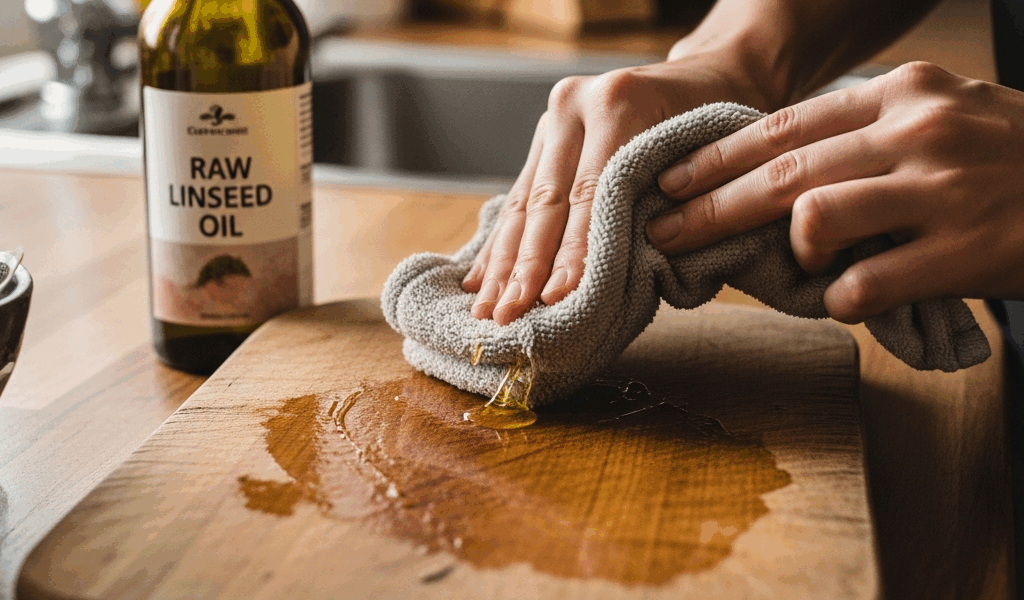
Raw linseed oil is pressed from flax seeds with no chemical additives. It’s the same flaxseed oil sold in grocery stores as a nutritional supplement, just packaged for woodworking use. It’s been used to finish wood for centuries and it is food safe once fully cured.
The problem with raw linseed oil is patience. It takes days to dry to the touch and weeks to fully cure. In humid conditions, you might wait a month before the surface stops feeling tacky. For a cutting board or salad bowl that you want to use this weekend, raw linseed oil requires more waiting than most people are willing to do.
Application is simple: wipe on a thin coat, let it soak for 15 to 20 minutes, wipe off the excess. Repeat two to three times with 24 to 48 hours between coats. Once it’s fully cured — and cured means hard and dry, not just dry to the touch — the surface is safe for food contact.
Boiled Linseed Oil: Faster but Not Food Safe
Here’s where people get confused: “boiled” linseed oil isn’t actually boiled. It’s raw linseed oil with metallic drying agents added — typically cobalt, manganese, or petroleum-based solvents — that accelerate the drying time from days to hours. These additives make the oil dry faster and harder, which is great for furniture and woodwork. They also make it unsuitable for surfaces that contact food.
The metallic driers in boiled linseed oil are the issue. Cobalt and manganese compounds are toxic if ingested. While the amounts in a cured finish are small, no food safety authority considers boiled linseed oil appropriate for cutting boards, bowls, utensils, or any surface where food will make contact.
Use boiled linseed oil on furniture, tool handles, exterior wood, and any project that won’t touch food. It’s an excellent, traditional finish for those applications — penetrating, easy to apply, and easy to refresh. Just keep it away from your kitchen items.
What to Use Instead on Food-Contact Items
If you want the linseed oil look and feel without the long cure time of raw linseed oil, several food-safe alternatives dry faster:
Mineral oil: The most common cutting board finish. Food safe, widely available at pharmacies and grocery stores. It doesn’t cure or harden — it stays liquid in the wood — which means it needs periodic reapplication. Easy to use: wipe on, let soak, wipe off.
Walnut oil: Cures to a harder film than mineral oil and is food safe. Dries faster than raw linseed oil. One caution: nut allergy concerns. If anyone using the item has a tree nut allergy, skip walnut oil.
Pure tung oil: Food safe once fully cured. Dries harder than linseed oil and provides better water resistance. Make sure you’re buying pure tung oil — many products labeled “tung oil finish” contain petroleum solvents and are not food safe.
Beeswax and mineral oil blend: The combination gives you the penetration of mineral oil with a light wax barrier on the surface. Several commercial board butter products use this formula. Easy to apply, food safe, and gives the wood a nice sheen.
The rule is straightforward: if it touches food, use raw linseed oil (with patience) or one of the alternatives above. If it doesn’t touch food, boiled linseed oil is a perfectly good finish. Read the label on the can. If it says “boiled” or lists metallic driers in the ingredients, keep it away from your cutting boards.


Stay in the loop
Get the latest wood working workshop updates delivered to your inbox.