Rabbet Joints: Simple, Strong, and Versatile
The rabbet joint ranks among woodworking’s most useful connections. This L-shaped notch cut along a board’s edge or end creates a ledge for mating pieces to rest against. Simple to cut and surprisingly strong, rabbets appear throughout furniture construction.
Understanding the Rabbet
A rabbet consists of two dimensions: width (how far across the face) and depth (how far into the edge). These dimensions typically equal the thickness of the mating piece, creating a flush joint when assembled.
The ledge created by the rabbet provides two benefits: mechanical support for the mating piece and increased glue surface compared to a butt joint. These advantages make rabbets significantly stronger than simple butt joints while remaining easy to cut.
Common Rabbet Applications
Case Construction
Cabinet backs typically sit in rabbets cut around the case interior. This recesses the back panel, hides its edges, and provides a positive stop during assembly. The rabbet depth usually equals the back panel thickness.
Drawer Construction
Drawer backs often join sides with rabbets. The ledge supports the back while the front face remains clear for drawer front attachment. This joint assembles quickly while providing adequate strength for the application.
Box Corners
Simple boxes use rabbeted corners for quick assembly. The rabbet provides self-alignment during glue-up and increases joint strength over butt joints. Adding a few brads or screws creates durable utility boxes.
Picture Frames
Frame rabbets hold the glass, artwork, and backing in place. The rabbet depth accommodates all layers while the width provides a landing surface. Points or turn buttons secure the assembly.
Cutting Rabbets by Hand
Rabbet Plane
A rabbet plane’s blade extends to the full width of the sole, allowing cuts into corners. Set the depth with the blade projection; control width with a fence or careful guiding. Multiple passes remove material until reaching layout lines.
Combination of Tools
Without a rabbet plane, use a saw and chisel. Saw the shoulder line to define the width. Then chisel away waste to the depth line. This approach works but requires more time and skill.
Cutting Rabbets with Power Tools
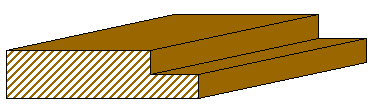
Table Saw
Two passes on the table saw cut perfect rabbets. The first pass defines depth (blade set to rabbet depth, fence set to position the cut). The second pass defines width (workpiece on edge, blade and fence reset appropriately). Some woodworkers use a single dado blade pass instead.
Router Table
A straight bit or rabbet bit on the router table cuts rabbets efficiently. The fence controls width for straight cuts; a bearing-guided rabbet bit follows curved edges. Multiple shallow passes prevent tearout and router strain.
Dado Blade
Stack dado blades to match the rabbet width, set blade height to the depth, and cut in a single pass. This method is fastest for production work but requires dado blade setup.
Rabbet Joint Variations
Simple Rabbet
The basic form: one piece rabbeted, the mating piece square-edged. The rabbeted piece provides the ledge; the square piece sits on it. Glue and clamp or add fasteners.
Double Rabbet
Both mating pieces receive rabbets, creating an interlocking joint. This doubles the glue surface and provides mechanical interlock in both directions. More work to cut but significantly stronger.
Stopped Rabbet
The rabbet terminates before reaching the board end, hiding the joint from one face. Common where visible rabbets would detract from appearance. Requires careful chiseling to square the stopped end.
Rabbet Dimensions
Standard Guidelines
For typical cabinet backs: rabbet width equals back thickness, depth equals half to two-thirds of the carcase thickness. This leaves adequate material strength while fully recessing the back.
For Joining Equal Thickness
When joining boards of equal thickness, rabbet width typically equals half to two-thirds of the board thickness. Deeper rabbets provide more ledge but leave less material; find the balance appropriate to your application.
Strengthening Rabbet Joints
Glue
Modern wood glue creates bonds stronger than the surrounding wood. Properly fitted rabbet joints with adequate glue coverage hold securely for furniture applications.
Fasteners
Nails, screws, or brads add mechanical reinforcement. They’re especially useful when clamping is difficult or when added strength is needed. Fasteners also hold parts in position while glue cures.
Combination with Other Joints
Rabbet and dado combinations interlock parts securely. The dado captures one piece; the rabbet captures another. This appears frequently in case construction for shelves and dividers.
Common Problems
Gaps
Rabbets with gaps indicate inaccurate cutting or warped material. Check your setup before cutting production pieces. Test cuts in scrap reveal problems before wasting project wood.
Tearout
Cross-grain rabbets may tear at the shoulder. Score the shoulder line with a knife before cutting. Take lighter passes when approaching the final depth.
Weak Joints
Rabbets that are too deep leave insufficient material for strength. Rabbets that are too shallow provide inadequate support and glue surface. Balance these factors for your specific application.
Practice Exercises
Cut rabbets in scrap using each available method. Compare results for accuracy and surface quality. Develop proficiency with your preferred method before committing to project work.
The rabbet joint’s combination of simplicity and utility makes it essential in every woodworker’s repertoire. Master this fundamental joint and you’ll find uses for it in countless projects.

Stay in the loop
Get the latest wood working workshop updates delivered to your inbox.