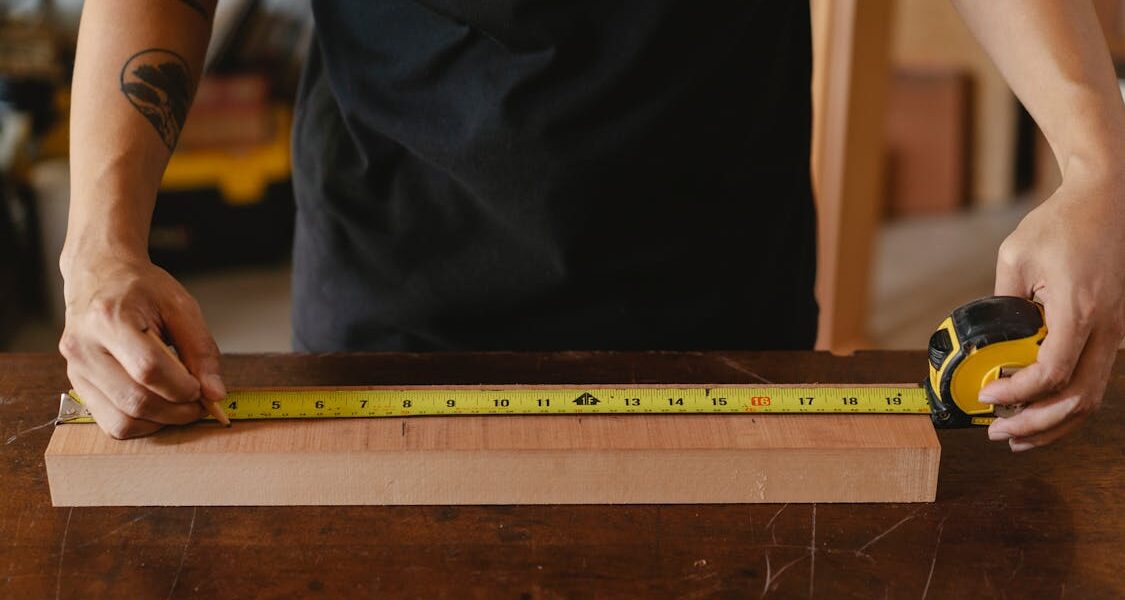
The Measure Twice Philosophy
“Measure twice, cut once” sounds like simple advice, but understanding why it matters transforms your woodworking. Precision isn’t about obsessive perfectionism—it’s about making parts that actually fit together.
Why Measurements Go Wrong
Every measurement introduces potential error. Tape measures stretch, hooks slide, and eyes misread marks. Pencil lines have width. Saw kerfs consume material. Each step in the process can drift slightly from intended dimensions.
These errors compound across multiple parts. If four table legs each run 1/16″ long, the accumulated error creates visible unevenness. Joinery that’s consistently 1/32″ off in the same direction might work; random variation in any direction creates gaps and misalignment.
Measurement Fundamentals
Reference Surfaces
Accurate measurement requires flat, straight reference surfaces. A warped board edge throws off every measurement taken from it. Before measuring, verify that your reference edge is true. Mark which edge you’re measuring from and use it consistently.
Consistent Positioning
The tape measure hook moves slightly to accommodate inside versus outside measurements. This movement introduces variation if you’re not consistent. Hook over the end for outside measurements; butt against an edge for inside measurements. Don’t mix methods within a project.
Reading the Scale
Position your eye directly above the measurement point. Viewing at an angle creates parallax error—readings that differ from actual dimensions. On long measurements, this effect increases significantly.
Marking Accurately
A sharp pencil point creates finer marks than a dull one. Marking knives create the finest lines of all. For joinery work, knife lines provide both visibility and a physical edge that guides tool starts.
Mark on the waste side of cut lines. Indicate which side is waste with an X or hash marks. This prevents the tragic confusion of cutting on the wrong side of the line.
The Second Measurement
The point of measuring twice isn’t repetitive busywork. It’s verification. The second measurement should confirm the first. When they match, proceed with confidence. When they differ, stop and investigate before cutting.
Different methods provide better verification than identical repetition. Measuring from the opposite end, using a different tool, or having someone else check all provide independent verification that catches errors.
Beyond the Tape Measure
Story Sticks
A story stick records dimensions physically on a wooden strip. Mark actual measurements directly rather than relying on numbers. Transfer dimensions from stick to workpiece without any number reading or conversion. This eliminates entire categories of error.
Direct Transfer
When possible, mark measurements directly from mating parts rather than measuring with tools. Hold pieces together and mark where they meet. The resulting fit depends on alignment, not arithmetic.
Templates and Jigs
Once you establish correct dimensions, capture them in templates or jigs. Every subsequent part gets measured against the template rather than re-measured from scratch. This ensures consistency across multiple identical parts.
When Precision Matters Most
Joinery
Mortise and tenon joints require matching dimensions. A tenon too thick won’t fit; too thin creates a weak, sloppy joint. Measure both the mortise opening and tenon thickness, adjusting until they match.
Assemblies
Parts that must align in final assembly require coordinated measurements. Drawer fronts matching case openings, table legs meeting rails at the same height, shelf pins aligned across a cabinet—all demand consistent measurement throughout.
Hardware Installation
Hinges, drawer slides, and other hardware require precise mounting hole locations. Measure twice because filling and redrilling is obvious and ugly. Use manufacturer templates when provided; make your own for repeated installations.
When Precision Matters Less
Not every cut demands extreme accuracy. Rough dimensioning before final milling allows generous margins. Internal parts invisible in the finished piece need only function, not look perfect. Proportional relationships often matter more than specific dimensions.
Understanding which measurements matter most lets you focus attention appropriately. Obsess over joinery dimensions while accepting wider tolerances on rough cuts.
Common Measurement Errors
Inside versus Outside
Confusing whether a dimension represents the inside of an opening or the outside of a part causes dramatic errors. A box needing a 12″ inside width requires wider boards to account for material thickness. Verify which dimension you need before cutting.
Forgetting Kerf
Saw blades consume material—typically 1/8″ per cut. Multiple cuts from a single board must account for this waste. A 48″ board doesn’t yield four 12″ pieces; you get three pieces with material lost to kerfs.
Measuring to Wrong Reference
Starting measurements from inconsistent reference points scrambles entire projects. Establish clear references (a face, an edge, an end) and use them throughout. Mark references on workpieces to maintain consistency.
Developing Measurement Habits
Consistent routines prevent errors better than vigilant attention. Always measure from the same reference. Always mark waste. Always verify before cutting. Habits work automatically; concentration fails when you’re tired.
Check your measuring tools periodically. Compare tape measures against known standards. Verify square tools are actually square. Calibrated tools make accurate measurements possible; uncalibrated tools make accuracy impossible regardless of technique.
The Payoff
Taking time to measure carefully saves time overall. Remaking parts consumes far more time than careful initial measurement. The frustration of poor fits damages both projects and motivation. Precision habits prevent these problems before they occur.
Measure twice. Cut once. It’s not just a saying—it’s the foundation of woodworking success.



Stay in the loop
Get the latest wood working workshop updates delivered to your inbox.