Understanding Door Construction Basics
Door building has gotten unnecessarily intimidating, with all the mortise-and-tenon mysticism flying around online. As someone who has spent years building doors — cabinet doors, interior passage doors, a few exterior entries — I learned everything there is to know about what actually matters. Today, I will share it all with you.
But what is door construction, really? In essence, it’s a solved problem with a handful of proven approaches. But it’s much more than that — it’s about choosing the right method for the wood movement reality you’re dealing with, not the prettiest joinery technique.
Slab Doors: The Simplest Option
Slab doors consist of a single flat piece of material. For woodworkers, this typically means edge-glued boards creating a solid panel. While conceptually simple, slab doors require careful wood selection and preparation to prevent warping.
Building a Solid Wood Slab Door
Start with kiln-dried lumber at 6-8% moisture content. Select boards with straight grain and minimal defects. Alternate growth ring orientation between adjacent boards to minimize cupping. Joint edges perfectly flat before glue-up, using biscuits or dowels for alignment if needed.
After glue cures, flatten both faces with a hand plane or drum sander. A slight convex shape (belly) on interior doors helps them seal against stops. Allow the glued panel to acclimate for several days before final dimensioning.
Frustrated by a cupped slab door on a bathroom cabinet, I started alternating grain orientation religiously on every glue-up. It’s one of those extra fifteen minutes of attention during layout that saves an afternoon of work later.
Slab Door Considerations
Solid slab doors work best for interior applications where temperature and humidity remain relatively stable. Wood movement across the width can cause binding or gaps seasonally. Frame construction addresses this limitation for exterior doors and larger openings.
Rail and Stile Construction
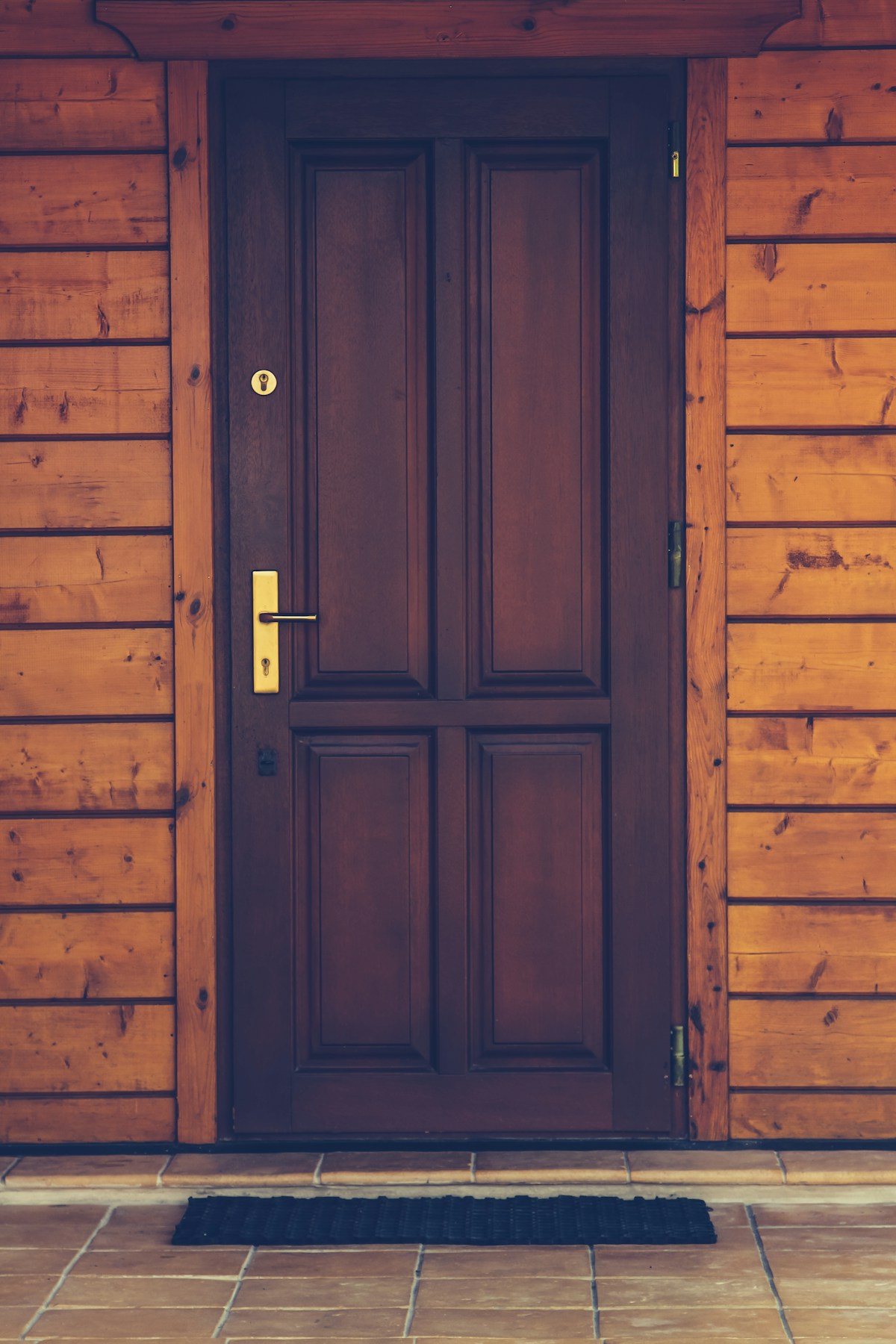
The rail and stile method creates a frame around a floating panel. Rails run horizontally, stiles run vertically. This construction allows seasonal wood movement while maintaining door stability.
The wood moves freely inside its frame, the frame stays square, and the door functions for decades without fighting itself.
Anatomy of a Rail and Stile Door
The two vertical stiles establish door width and provide hinge and latch mounting surfaces. The top rail and bottom rail connect the stiles, creating a rigid frame. The center panel floats in grooves cut into the frame members, free to expand and contract.
Joinery Options
Traditional mortise and tenon joints provide exceptional strength for rail and stile connections. Cut mortises in the stiles, tenons on the rail ends. Size tenons to fill approximately two-thirds of the stile thickness.
Cope and stick joints, made with matched router bits or shaper cutters, create decorative profiles while forming the panel groove and joint simultaneously. These joints require proper technique but speed production considerably.
Dowel joints offer a middle ground, providing good strength without specialized tooling. Use at least two dowels per joint, properly spaced and sized for the frame thickness.
I’m apparently someone who owns cope-and-stick router bits but still reaches for mortise-and-tenon on anything structural. The router bits work fine for cabinet doors. For a full-size passage door, I want that mechanical connection.
Panel Options
The center panel defines much of the door’s visual character. Several options suit different applications and skill levels.
Flat Panels
Flat panels suit contemporary designs and painted applications. Size panels 1/16″ smaller than the groove depth allows on all sides, providing room for expansion. Plywood makes excellent flat panels, eliminating wood movement concerns entirely.
Raised Panels
Raised panels feature a shaped edge transitioning from thick center to thin edges fitting the frame grooves. Create the profile using a table saw, router table, or hand planes. The raised field provides visual interest and creates natural shadow lines.
Glass Panels
Glass panels allow light transmission while maintaining privacy with textured or frosted options. Secure glass with removable stops rather than permanent grooves, allowing replacement if damaged.
Beginning Door Projects

The smaller scale makes stock preparation easier and requires less material investment. Practice the joinery methods and panel-raising techniques at cabinet scale first.
A simple three-panel cabinet door teaches all fundamental skills: cutting accurate rails and stiles, creating consistent joinery, fitting panels with proper clearance, and achieving flat, square assemblies. Master these basics before scaling up to larger projects.
Essential Measurements
Standard interior door thickness measures 1-3/8″. Exterior doors typically run 1-3/4″. Stile width usually spans 4-6″ for interior doors, providing adequate hinge and hardware mounting surface. Rail width matches or slightly exceeds stile width for visual balance.
Calculate panel dimensions after cutting and dry-fitting the frame. Measure the actual groove depth and opening size rather than relying on nominal dimensions. This ensures perfect panel fit regardless of minor joinery variations.
Assembly Tips
Dry-fit all components before applying glue. Check for square by measuring diagonals. Verify the panel floats freely without binding. Apply glue to joints only, never to panel edges. The panel must move independently as humidity changes.
Clamp assemblies flat on a known-flat surface. Check for twist before glue sets by sighting across the door face. Adjust clamp pressure as needed to pull the assembly flat and square.
Building Your Skills
Door construction combines multiple woodworking skills: accurate dimensioning, precise joinery, panel raising, and careful assembly. Each component must meet tight tolerances for the finished door to function properly. Practice these skills individually before combining them in a door project.
Start with shop furniture featuring frame and panel construction. A tool cabinet door or storage unit provides low-stakes practice before tackling visible household doors. The skills transfer directly, and mistakes become learning opportunities rather than expensive failures.



Stay in the loop
Get the latest wood working workshop updates delivered to your inbox.