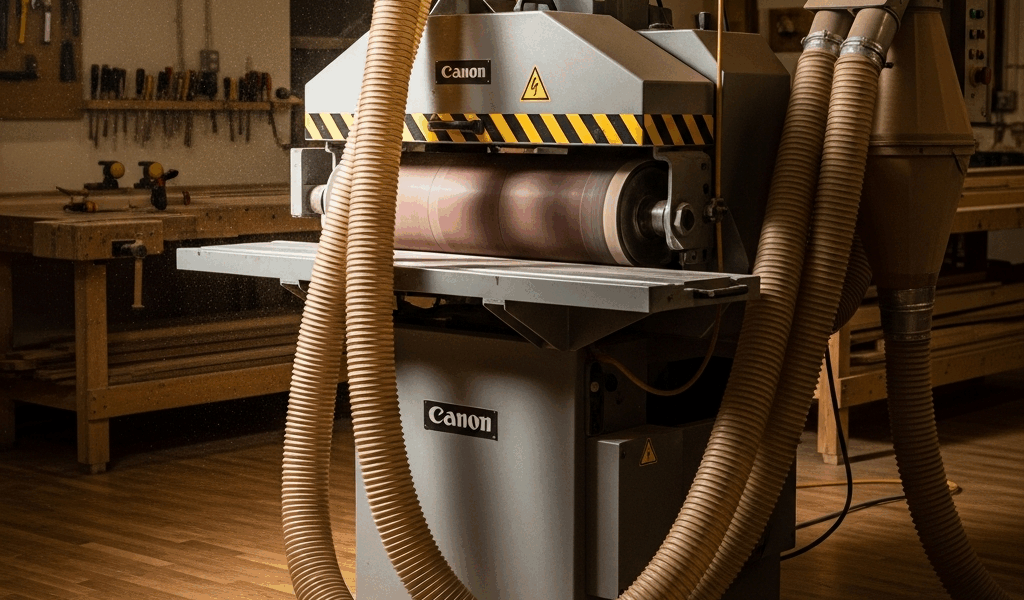
The Supermax 16-32 drum sander has been out of production for years, but it keeps showing up on Craigslist and in forum recommendations like it’s still on the shelf at Woodcraft. There’s a reason for that — the machine has a reputation that outlasted the company that made it. But is that reputation deserved, or is it nostalgia talking?
I dug through over a decade of owner discussions on forums to find out what people actually say about the 16-32 after putting real hours on it.
What Made the Supermax 16-32 Special
The Supermax 16-32 is a dual-drum open-ended sander that handles stock up to 32 inches wide in two passes (16 inches per pass, flip the board). For a hobbyist shop, that covers virtually any panel or table top you’d build. The dual drums — one for heavy stock removal and one for finish sanding — let you go from rough to smooth in a single feed through the machine.
The build quality is where the Supermax separated from cheaper drum sanders. Cast iron table, heavy steel frame, and a conveyor feed system that moves stock through at a consistent rate. The machine weighs around 300 pounds, which means it stays planted and doesn’t vibrate itself across the floor during use.
Supermax (later rebranded as Performax, then sold to Jet) built a machine that was overengineered for the home shop market. That overengineering is why machines from 2005 are still running strong in 2026.
What the Forums Say After 15 Years
Consistent praise: Surface quality. Owners report glass-smooth finishes at 220 grit that are ready for stain or finish without additional hand sanding. The conveyor speed control lets you dial in the feed rate for different species and grain patterns. Hardwoods, softwoods, figured wood — the 16-32 handles them all without snipe or chatter when properly adjusted.
Common complaint #1: The conveyor belt. It’s the one consumable that causes headaches. The belts stretch over time, slip under heavy loads, and replacements from aftermarket suppliers vary in quality. Several owners have replaced the original conveyor with a third-party upgrade kit that uses a different belt material. Finding the right replacement belt for a discontinued machine requires some forum research.
Common complaint #2: Dust collection demands. The 16-32 generates a massive volume of fine dust. Owners universally recommend a minimum 2 HP dust collector dedicated to the sander. Connecting it to a small shop vac or an undersized collector results in a dust cloud that fills the shop. The dust port is 4 inches, and every inch of duct run reduces suction.
Parts availability: This is the real concern with buying one in 2026. Supermax is gone. Performax is gone. Jet inherited some of the product line but parts compatibility varies by serial number. Sanding drums, bearings, and motor components can be sourced from general industrial suppliers, but anything machine-specific may require creative problem-solving.
Should You Buy a Used One Today?
Buy it if: You find one in good mechanical condition for $500 to $800, the conveyor belt works, and both drums spin true. At that price, you’re getting a machine that competes with new drum sanders costing $1,500 to $2,000. Inspect the conveyor belt tension, check both drums for flat spots or damage, and run a test board through it before handing over cash.
Skip it if: The seller can’t demonstrate it running, the conveyor belt slips, or the price is above $900. At that point, you’re close enough to new drum sander territory (Jet, Powermatic, or the Grizzly G0459) that the warranty and parts availability justify the extra spend.
The Supermax 16-32’s reputation is earned. It’s a genuinely excellent drum sander that was built heavier and better than it needed to be. The risk in 2026 is parts — and that risk grows every year. If you buy one, join the woodworking forums and bookmark the threads where owners share parts sources and maintenance tips. You’ll need them eventually.


Stay in the loop
Get the latest wood working workshop updates delivered to your inbox.