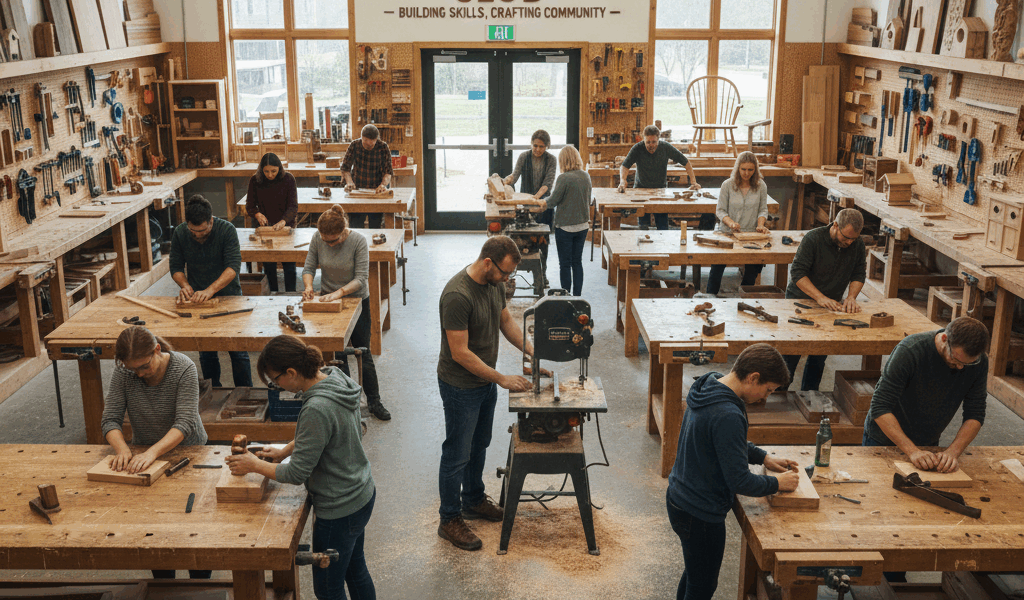
As someone who’s spent years in workshop settings, both solo and in group environments, I’ve learned everything there is to know about what actually accelerates skill development — and why a carpentry club is the answer most people never consider. Today, I’ll share it all with you.
Most woodworkers learn in isolation — tutorials online, trial and error in the shop, books consulted when something goes wrong. This approach works well enough to develop basic competence, but it has a ceiling. The skills that push woodworking from “functional” to “actually good” — sharpening that produces a truly keen edge, hand planing to a polished surface, joinery that fits with no gap visible — these skills are genuinely hard to develop without watching someone who does them well and getting feedback on your own attempts. That’s what a carpentry club provides.
The Mentorship That Nobody Talks About
Every active carpentry or woodworking club has members who have been doing this for 20 or 30 years. These are people who have built hundreds of projects, made every mistake you’ll encounter, and developed the intuitions about wood behavior, tool setup, and joinery that take years to accumulate alone. In a club setting, these experienced members are accessible in a way they never would be through any other channel.
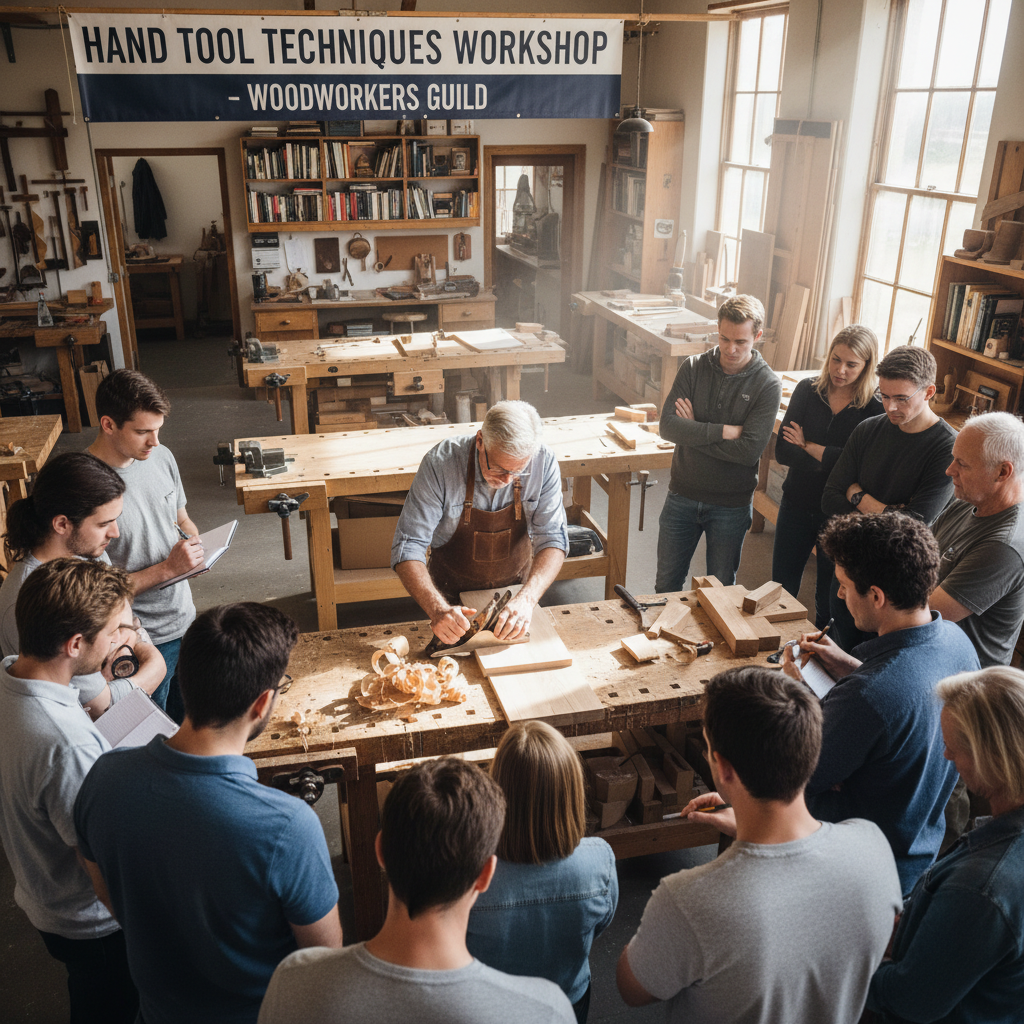
This isn’t formal mentorship with scheduled sessions. It’s the conversation at a club meeting when you describe a problem you’re having with tearout on a figured maple panel, and someone who has planed that wood type for 20 years walks you through what’s actually happening. It’s the demonstration during a tool maintenance night when you see, in person, what a truly sharp chisel edge looks like. Watching is different from reading. The transfer of tacit knowledge — the physical intuitions about how tools feel when they’re right — happens better in person than through any other medium. Frustrated by my lack of progress on sharpening technique, I joined a local guild and had the problem solved in one meeting that I’d been struggling with for months.
Club Access to Equipment You Don’t Own
Many woodworking clubs maintain shared tool libraries and, in some cases, dedicated club workshops.
Access to tools you don’t own, in a club setting where experienced users can show you how to use them correctly, solves a real problem. Expensive specialty tools represent a significant capital commitment for uncertain benefit — you’re not sure how much you’ll use them until you’ve tried them. Clubs let you try before you buy, on real projects, with guidance from people who know the tools well. The result is better purchasing decisions and access to capability that wouldn’t otherwise be economic. I’m apparently one of the few people who finds the tool library access argument more compelling than the social one, even though both turned out to be significant.
Accountability and Project Completion
There’s a less discussed benefit to club membership: the social dynamics of having an audience for your work. Woodworkers who show work at club meetings — who bring in projects, discuss what they’re making, and receive feedback from other members — tend to finish more projects than those who work entirely alone. The prospect of showing something at the next meeting creates a natural deadline and external motivation that the solitary shop lacks entirely.
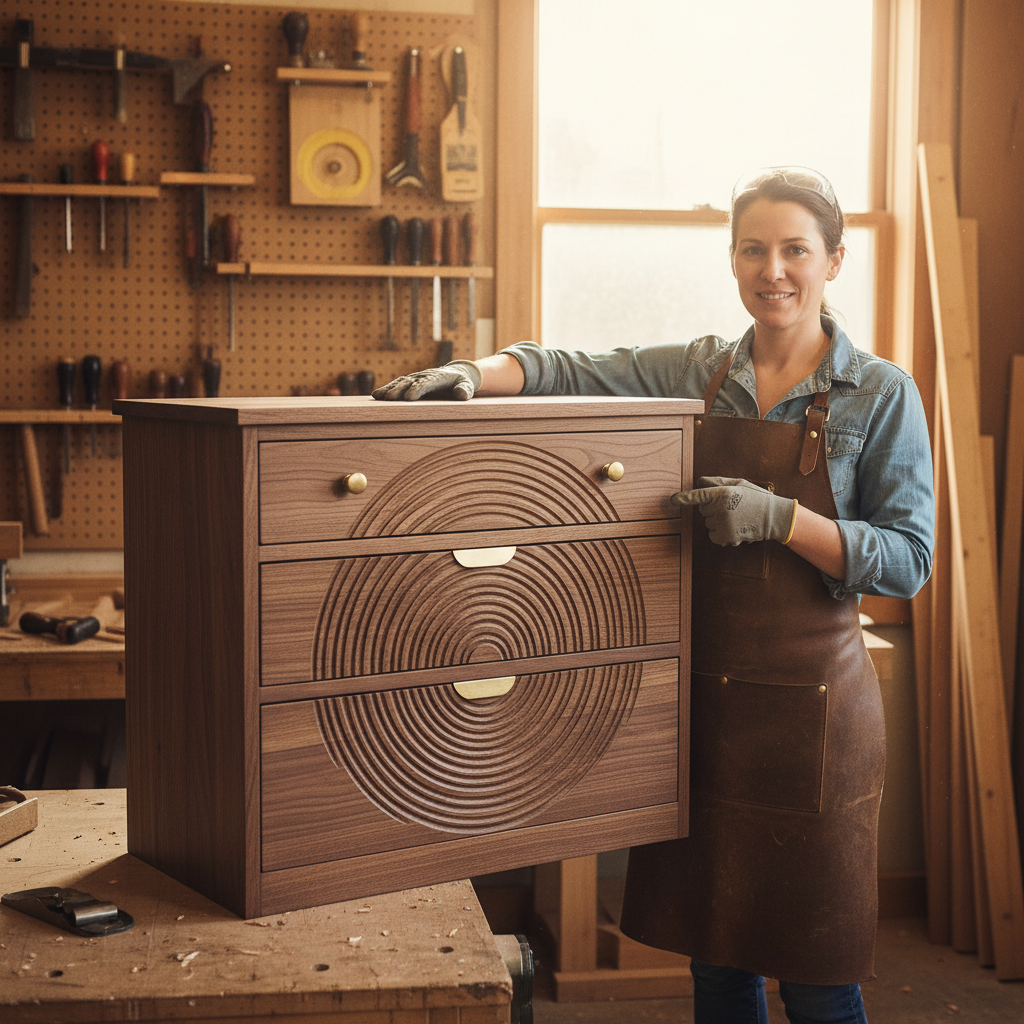
This isn’t peer pressure in a negative sense. It’s the same mechanism that makes workout partners effective for maintaining exercise habits. Having people who are interested in your progress, who will ask “how did that project come out,” creates a low-key accountability structure that moves projects from “in progress indefinitely” to “actually finished.” Woodworkers who struggle with project completion — and there are many — often find that club membership is the practical intervention that addresses the problem.
Finding and Evaluating a Club
The American Association of Woodturners, the Furniture Society, and local chapters of the Fine Woodworking network maintain directories of clubs. A simpler approach: search “[your city] woodworking club” or “[your city] woodworkers guild” — most active clubs have a web presence. Attend a meeting as a guest before joining; most clubs welcome visitors.
The characteristics of a good club: active meetings with hands-on demonstrations rather than just presentation slides, members at multiple skill levels willing to share knowledge, and a culture where questions are welcomed rather than treated as interruptions. The best clubs feel like conversations about craft rather than performances of expertise. That culture is the one most likely to actually improve your skills — and it’s worth seeking out specifically over a club that has impressive members but a closed culture about sharing what they know.



Stay in the loop
Get the latest wood working workshop updates delivered to your inbox.