Today, I will share it all with you.
Full disclosure — I’m not sponsored by any of these companies. What follows is based on tools I’ve actually owned, borrowed, broken, and replaced with my own money. Your mileage may vary, but this is my honest take.
DeWalt: The Jobsite Workhorse
I’ve got more DeWalt yellow in my shop than any other color, and there’s a reason for that. These tools take a beating and keep going. My DeWalt miter saw has been on at least fifteen jobsites and in my shop for years. Still cuts straight, still starts every time.
The FlexVolt battery system was a game-changer for me. One battery platform that works across different voltage tools means fewer chargers and fewer batteries sitting around. I use FlexVolt in my circular saw and my table saw, and the power output is genuinely comparable to corded tools. Not quite there, but close enough that I rarely plug in anymore on smaller jobs.
Where DeWalt really shines is ergonomics. I’ve got big hands and some brands feel cramped, but DeWalt grips fit me well. The triggers have a good feel, the weight distribution is balanced. When you’re running a drill overhead for an hour installing cabinet hardware, that stuff matters. Their service network is solid too — I’ve had a couple warranty claims and they handled them without hassle.
Makita: Smooth and Quiet
My first Makita was a random orbital sander, and I was immediately impressed by how smooth it ran. Less vibration than anything else I’d used. That’s kind of Makita’s thing — their tools feel refined in a way that’s hard to describe until you hold one.
The brushless motors in their LXT cordless line are notably efficient. I get more runtime per charge than I expected, and the tools run cooler. My Makita track saw is probably the tool I’d grab if my shop was on fire and I could only save one thing. Dead straight cuts, minimal tearout, and it weighs almost nothing compared to the competition.
Noise levels are genuinely lower with Makita. I still wear ear protection, but the difference is noticeable, especially with their routers and sanders. For a shop that’s attached to my house — which mine is — that matters more than you’d think. My wife can tell when I switch from the Makita router to a different brand’s router just by the sound coming through the wall.
Milwaukee: Built Like a Tank
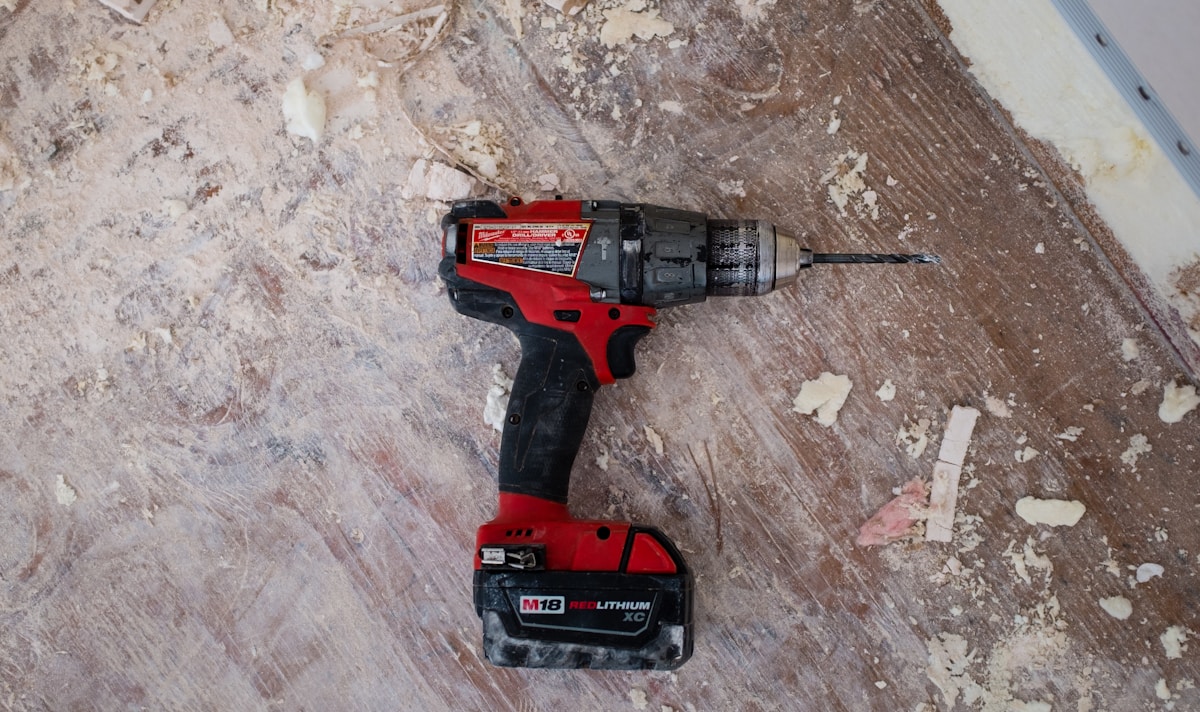
Milwaukee is what I reach for when I know a tool is going to get abused. Their M18 Fuel line is absurdly durable. A buddy of mine dropped his Milwaukee impact driver off a second-story scaffold. Picked it up, pulled the trigger, still worked. I’m not recommending that as a test, but it says something.
The M12 line is what I keep in my everyday carry bag. The compact drill driver and impact driver are small enough to fit in tight spaces but powerful enough for 90% of general tasks. I use the M12 ratchet for automotive stuff too — it’s one of those tools I didn’t think I needed until I had one.
They make stuff for plumbers, electricians, and HVAC techs that nobody else does. The bandsaw, the pipe threader, the cable pulling tools — if you’re in a trade, Milwaukee has thought about your specific problems and built tools to solve them.
Bosch: Quiet Precision
My Bosch plunge router has been a shop staple for over a decade. The depth adjustment is buttery smooth, the collet never slips, and the dust collection actually works. Their jigsaw is the best I’ve ever used — virtually no blade wander, which is a rare thing for a jigsaw. The German engineering reputation isn’t just marketing with Bosch. You can feel it in the tolerances and the fit of everything.
They’ve also embraced connectivity in a way that’s actually useful rather than gimmicky. Being able to adjust tool settings through an app might sound like overkill, but when you’re dialing in a specific speed on a router for a tricky cut, it’s handy. Not essential, but handy.
Festool: The Expensive One Everyone Argues About
Let me just say it: Festool is expensive. Really expensive. A Festool track saw costs roughly double what the Makita version does. Is it twice as good? Honestly… no. But is it better? Yeah, it is. Just not by the margin the price suggests.
Where Festool earns its price tag is in the system. Everything connects. The track saw mounts to the guide rail, the dust hose clicks into the extractor, the extractor turns on automatically when you pull the trigger. It sounds like a small thing, but after a full day of cutting sheet goods, the workflow savings are real. I borrowed a complete Festool setup for a built-in closet project once and I finished noticeably faster than I would have with my own tools.
Their dust extraction is the best in the business. If you have respiratory concerns or you work in clients’ homes where dust control is critical, Festool might actually be worth the investment. The track saw and their Domino joiner are the two products that generate the most loyalty. The Domino in particular does something no other portable tool does — it cuts perfect floating tenon mortises in seconds. I’d own one if I could justify the cost for how often I’d use it.
Stanley Black and Decker: The Gateway Tools
I started woodworking with Black and Decker power tools and Stanley hand tools. I think most of us did. They’re everywhere, they’re affordable, and for basic tasks, they work fine. My very first circular saw was a Black and Decker, and I built a deck with it before upgrading to something beefier.
Stanley hand tools remain genuinely good, especially for the price. Their tape measures, utility knives, and chisels are shop staples. I’ve got a Stanley chisel set that’s been in regular use for twelve years. Not as refined as premium Japanese chisels, but they hold an edge decently and they were a fifth of the price.
Their smart tool initiative is interesting — connected tools that talk to your phone for diagnostics and settings. Not sure the average woodworker needs that, but for fleet management on a commercial jobsite, I can see the appeal.
Hilti: The Heavy Hitters
Hilti isn’t really a woodworking brand. It’s a concrete and steel brand. But if you’ve ever needed to drill into a concrete foundation to mount a ledger board, or anchor a workshop wall to a slab, you’ve probably wished you had Hilti tools. They’re overbuilt in the best possible way.
Their direct sales model means you deal with Hilti reps who actually know construction. You tell them what you need to do, and they spec the exact tool and fastener combination. It’s a different experience from browsing a big box store aisle. The tools are expensive and highly specialized, but for commercial construction, they’re often the only choice that meets spec.
Metabo HPT: The Sleeper Pick
Used to be Hitachi, now it’s Metabo HPT. Whatever you call them, their nailers are outstanding. I’ve run their framing nailer for years and it has never jammed on me. Not once. Their brad nailer is equally reliable. For anyone doing trim work, cabinet installation, or general finish carpentry, Metabo HPT nailers are hard to beat.
The MultiVolt system is clever — one battery works in both corded and cordless modes. Pull the battery out, plug in a cord, and you’ve got unlimited runtime. Useful for long cuts on a miter saw where a battery might give out mid-project. The tools themselves are well-balanced and reasonably quiet. Not as many options as DeWalt or Milwaukee, but what they do make tends to be very good.
Craftsman: The Garage Standard
Craftsman has had its ups and downs. The quality dipped for a while when manufacturing moved around, but they’ve been clawing back. The V20 cordless platform is decent for home use — not professional grade, but perfectly fine for hanging pictures, assembling furniture, and weekend projects.
Their lifetime warranty used to be legendary. It’s still solid, though the process is a bit different now than the old “walk into Sears and swap it” days. For someone who needs a basic set of tools and doesn’t want to spend a fortune, Craftsman still makes sense. I keep a Craftsman socket set in my truck for roadside stuff, and it’s been reliable for years.
Recommended Woodworking Tools
HURRICANE 4-Piece Wood Chisel Set – $13.99
CR-V steel beveled edge blades for precision carving.
GREBSTK 4-Piece Wood Chisel Set – $13.98
Sharp bevel edge bench chisels for woodworking.
As an Amazon Associate, we earn from qualifying purchases.


Stay in the loop
Get the latest wood working workshop updates delivered to your inbox.