Why Chisels Dull Faster Than They Should
Three years. That’s how long I spent frustrated by edges that went soft after maybe twenty minutes of actual work. As someone who inherited a set of Stanley chisels from my grandfather and later invested in proper Narex tools, I learned everything there is to know about the gap between normal wear and premature dulling. Today, I will share it all with you. The problem isn’t usually the steel — it’s what happens to these tools before, during, and after we touch them.
Let me walk through what I discovered.
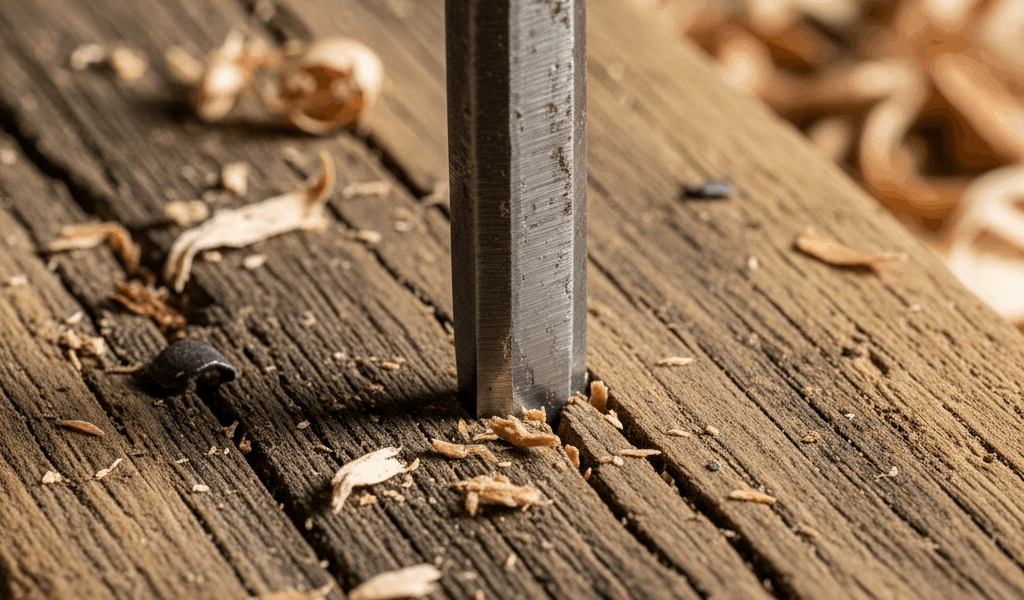
First, embedded nails. Reclaimed wood is beautiful and seductive. Those barn beams or old floorboards will make your project sing. What you don’t think about until your $40 chisel feels like a butter knife is the nails hiding inside the wood — maybe driven flush a century ago. One strike and you’ve got a nick. That nick propagates. Your edge is compromised.
Then there’s storage. Probably should have opened with this section, honestly. Most woodworkers toss their chisels into a toolbox with screwdrivers, wrenches, and whatever else needs a home. The blade clangs against metal repeatedly. Even soft steel on hard steel creates microscopic damage. The edge doesn’t just dull — it gets folded, dinged, and peened from constant contact.
Using the wrong chisel angle mid-cut ruins edges fast. Your chisel isn’t a paint scraper, though I’ve used mine like one more times than I’d admit. Working against the grain at 45 degrees instead of the proper 25-30 degrees of attack? You’re asking for tearout and edge rollover. The blade flexes. The steel fatigues differently.
Heat damage is sneaky. Leave a chisel sitting near your power planer or let it make contact while a tool is spinning, and friction heats the steel beyond what it’s tempered to handle. You won’t see a visible change. But the metallurgical structure shifts. That edge becomes brittle and fragments instead of staying sharp.
Finally, dirty stropping leather. Most of us inherit or buy a stropping compound block and use it straight away. If that leather has dust, wood fibers, or metal particles embedded in it, you’re not refining your edge — you’re scoring it with abrasive material every time you drag your blade across.
The Storage Mistake That Ruins Edges in Weeks
Storage is where edges truly die.
The biggest mistake I made — and the one I see in nearly every workshop I’ve visited — is leaving chisels unprotected in a toolbox drawer. A $25 plastic blade guard costs roughly what you’d spend resharpening a single quality chisel once. The math is obvious. Execution is rare.
Blade guards come in a few forms. Vinyl sleeves that slide over the chisel head are simplest — cheap, effective, easy to lose. Better are clamshell guards with magnetic backing. Bessey makes solid ones around $3-5 per guard. They stick to any ferrous surface in your workshop.
Magnetic strips mounted to your wall or inside a toolbox lid? That’s the long-term solution I switched to after my third ruined edge. A 12-inch strip costs $8-12. Your chisels hang vertically, edge-safe, visible. This is the single biggest storage win most woodworkers overlook.
Here’s what happens when you throw a chisel into a drawer: the blade strikes metal or wood at unpredictable angles. Impact creates micro-fractures along the edge. These fractures compound. On the second or third use after sloppy storage, you’ll feel distinct resistance. That’s not the wood being harder — that’s your edge catching on its own damage.
Compare that to a tool stored flat on magnetic strip or in a wall-mounted chisel roll. Zero impact. Zero stress on the edge during storage. Your chisel spends 95% of its life stored, not working. Where you keep it matters more than how you sharpen it.
Technique Habits That Kill Edge Longevity
How you use a chisel shapes edge longevity as much as where you store it.
Scraping is the worst habit. Using a chisel to scrape dried finish, glue, or old paint transfers the scraping motion’s side load entirely to the edge. The blade wants to roll. Fighting dried epoxy with a $60 Japanese chisel means grinding the edge against hardened material that’s fighting back. Listen — a proper chisel cut sounds clean and clear. A scraping motion sounds gritty and strained. That grittiness is your edge fragmenting.
Prying with the handle is another one. The handle isn’t designed for leverage. Prying loads the spine and edge with lateral force the tool wasn’t built to handle. I pried a stuck piece of walnut with a chisel once and heard a subtle pop. Microscopic crack in the blade. The chisel never felt the same after.
Striking too hard on hardwoods compounds edge damage fast. You don’t need a mallet swing that sounds like a gunshot. Light, controlled taps work better and last longer. If you’re swinging hard enough that the chisel skitters or bounces in the wood, you’re transmitting shock back into the edge.
Working against grain direction multiplies edge dulling. Feel the resistance — if your chisel is fighting the wood instead of cutting smoothly, you’re going the wrong direction. Reverse your approach or adjust your angle. Forcing the cut doesn’t just dull the edge; it peels the steel fiber instead of shearing it clean.
Not cleaning between cuts is a daily habit killer. Wood dust, pitch, and debris pack into the back of the blade near the edge. This packed material acts like sandpaper during the next cut. Wipe your chisel on your apron every few cuts. Takes five seconds. Adds weeks to your edge life.
Stropping and Maintenance Between Sharpenings
Stropping isn’t sharpening. I confused them for years and kept wondering why stropping wasn’t keeping my edges sharp long-term — that distinction matters because the two do completely different things.
Stropping realigns the microscopic steel fibers along your edge. Sharpening removes steel to create a fresh edge. One is maintenance; the other is restoration. You need both, but stropping happens between sharpenings.
Light stropping on clean leather extends edge life remarkably. A quality leather strop runs $15-25. The stropping compound block is another $5. You use light pressure — the chisel edge trails behind your stroke, never pushing forward into the leather. That rolls the edge. Five to ten passes per side, maybe once or twice weekly if you’re using the chisels regularly.
How frequently? If you’re hand-planing or chiseling every day, stropping weekly makes sense. Twice monthly work? Monthly stropping is fine. The visual cue is when cuts start requiring more pressure. Before they feel noticeably dull, stropping brings them back to working condition for another week or two.
Make sure your leather is actually clean. Dust-embedded leather is worse than no stropping. Wipe it occasionally, and replace it every few years. Stropping compound builds up too. If your strop feels stiff or crusty, it’s time for new leather or at least cleaning the old piece thoroughly.
When to Sharpen vs. When to Replace
Not every dulled chisel deserves resharpening, and that’s a conversation worth having directly.
Quality chisels — Narex, Bahco, quality vintage English tools — hold value and durability through multiple resharpenings. You can hone a $50 Narex chisel back to razor sharpness in five minutes with a good stone. That chisel will last decades with proper care. Budget chisels sold in hardware store multi-packs? After one or two resharpenings, the steel may be compromised, or the handle may not justify the time investment. The economics shift.
Edge inspection tells you what you’re dealing with. The thumbnail test: drag your fingernail across the edge at about 45 degrees. A sharp chisel catches and stops your nail. A dull one slides. For the paper cut test, hold newsprint in one hand and try slicing it with a single downward stroke. Sharp tools slice cleanly. Dull ones crumple.
If you’ve got pitted or chipped edges — visible damage, not just dullness — that’s corrosion or impact damage. Minor nicks sometimes disappear after two or three sessions of honing as you work past the damaged layer. Deep chips mean you’re spending 20+ minutes of honing to restore the edge. At that point, for a budget chisel, replacement is smarter.
Prevention genuinely costs less than constant maintenance. Implement two things — magnetic strip storage and weekly stropping on clean leather — and your chisels will stay sharp three times longer than the average woodworker’s tools. You’ll sharpen maybe once monthly instead of weekly. That’s the math of prevention.
The reassurance here is simple: you’ve probably been making this harder than it needs to be. Most premature dulling isn’t an edge problem — it’s a care problem. Fix the care, and your edges stay sharp with minimal effort.


Stay in the loop
Get the latest wood working workshop updates delivered to your inbox.